

A narrow piece of wood in a Shanghai gym exposed a weakness that years of hard training had hidden.
By then, I had served as a Recon Scout in Baghdad. I had practiced combat sports, managed a boxing gym in East Harlem, and was actively working as a body-mind performance coach in China.
I was strong, conditioned, and great at suffering.
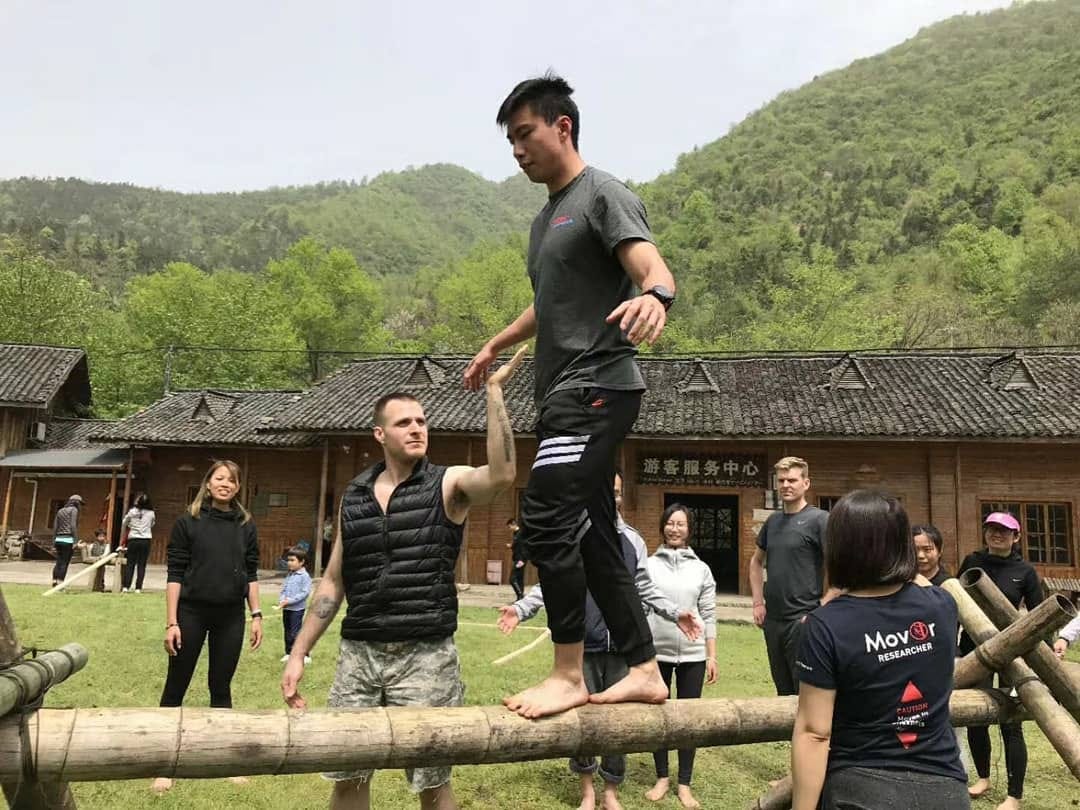
Then Oki Alexander, my first MovNat guide, asked me to walk across a beam in a crouch.
Within seconds, my breathing changed. My eyes dropped toward my feet. I got stiff.
I hesitated, overcorrected, lost balance, and stepped off.
My legs could move serious weight, but they couldn’t quietly organize my body over a narrow surface.
So I did what strong people often do when strength stops working.
I tried harder.
That made me worse.
Balance didn’t need more force. It needed a better flow of info.
It required relaxed attention, visual orientation, and sensitivity from my head to my toes. The more tension I added, the less responsive I became.
That beam taught me a distinction I had missed for years:
You can be fit and still be fragile.
Not weak.
Fragile.
Fragility isn’t the absence of ability. It is rigid dependence on the specific conditions, strategies, and identities that allow an ability to work.
My training had not failed. It worked exactly as designed. I was adapted to the problems I practiced: flat floors, known weights, predictable distances, standardized repetitions, and familiar rules.
My mistake was turning specific achievement into a general identity.
“I am strong at these lifts” became “I am strong.”
“I perform well in these workouts” became “I am prepared.”
That’s how competence becomes fragility.
The gym isolates qualities.
Life recombines them.
Life gives you tough terrain, awkward objects, incomplete information, poor sleep, emotional stakes, other people, and responsibilities that don’t care about your recovery plan.
A deadlift tells you what you can lift under selected conditions. A timed workout tells you what you can sustain inside a defined task. Neither tells you what remains when the object has no handle, the ground moves, or your child is crying.
When conditions change, what remains available?
I call the answer Embodied Antifragility.
Hardness resists.
Resilience recovers.
Antifragility lives, learns, and deepens.
Embodied Antifragility is how you meet challenges in a way that evolves your future relationship with challenge.
It develops through three interconnected capacities:
Contact. Capability. Coherence.
Contact reveals what is. It’s how awareness opens, senses, and attunes with what’s really happening.
Capability expands what is possible. It’s your capacity, optionality, and adaptability within what’s happening.
Coherence aligns what you express in the world. It’s how you bring those possibilities into action with integrity and alignment, without abandoning the people, places, and values your capability is called to serve.
Each of these became clear to me through a different chapter of my life.
That beam taught me to feel and attune.
The terrain of the jungle taught me to adapt.
Fatherhood taught me what adaptation must serve.
Contact: Reality Before Strategy
The beam didn’t resist me.
It informed me.
Through pressure and instability, it told me whether my strategy was working. But I could only receive the information if I became quiet enough to notice it.
Contact comes before capability. Before you can respond intelligently, you have to perceive accurately.
Under stress, we often stop relating with reality as it arises, and start repeating ingrained patterns.
We push harder because pushing worked before.
We become rigid because rigidity feels like control.
We speed up because slowing down feels vulnerable.
Stress narrows perception until our favorite strategy becomes the only one we can see.
Boxing taught me the same lesson.
Power is useless at the wrong distance. Speed is wasted with poor timing. Excess tension makes a fighter stiff, slow, and easier to knock out.
There is your stance, and there is the floor.
There is your technique, and there is the opponent.
There is your intention, and there is what’s actually happening.
The fighter who’s preoccupied with imposing his plan cannot receive the information that would improve it.
Contact is not passivity. It isn’t endlessly feeling, analyzing, or waiting around.
It’s the ability to sense, perceive, and attune before effort amplifies the wrong pattern.
That’s what the beam required.
Not more power.
More relationship.
My breathing, vision, tension, feet, and the beam had to become part of one responsive system. The moment I stopped trying to dominate the problem, I could start listening and learning from it.
The beam taught me to perceive. But perception alone isn’t enough.
You can accurately perceive a changing situation and still lack the options required to meet it appropriately.
This is where capability begins.
Capability: More Than Maximum Output
Contact gives you information.
Capability determines what you can do with it.
Capacity is what you can produce.
Capability is what you can accomplish in a given context.
Strength is a capacity. So are endurance, mobility, speed, and coordination.
They matter.
But they only become real capability only when you can organize them around a relevant problem in front of you.
Years after Shanghai, I moved to Zafra Nature Reserve, a regenerative community in the Colombian jungle. This is where I research and guide Natural Movement in the field.
At first, the territory looked like a richer movement gym. There were trees to climb, rivers to cross, and rocks to navigate.
Years with my feet on the ground corrected that view. A living place is not outdoor fitness equipment.
Its weather, water, soil, plants, animals, communities, and rhythms don’t rearrange themselves around your workout.
Mud changes the meaning of speed.
A jagged rock changes the meaning of strength.
Another person changes the meaning of the task.
Natural Movement, at its best, isn’t just gym exercises performed outside. It’s the development of adaptable human movement through real tasks and environments, in relationship with other lifeforms doing the same.
This requires more than capacity; it requires optionality and adaptability.
Sometimes the appropriate response is explosive. Sometimes it is patient.
Sometimes it is working together, changing the route, or choosing a better task.
A man rigidly holding onto one powerful solution in a world of diverse challenges is still fragile.
Adaptability emerges through intent, diverse exposure, and embodied problem-solving. I’m not encouraging random novelty, but variation that requires you to notice, adjust, and learn.
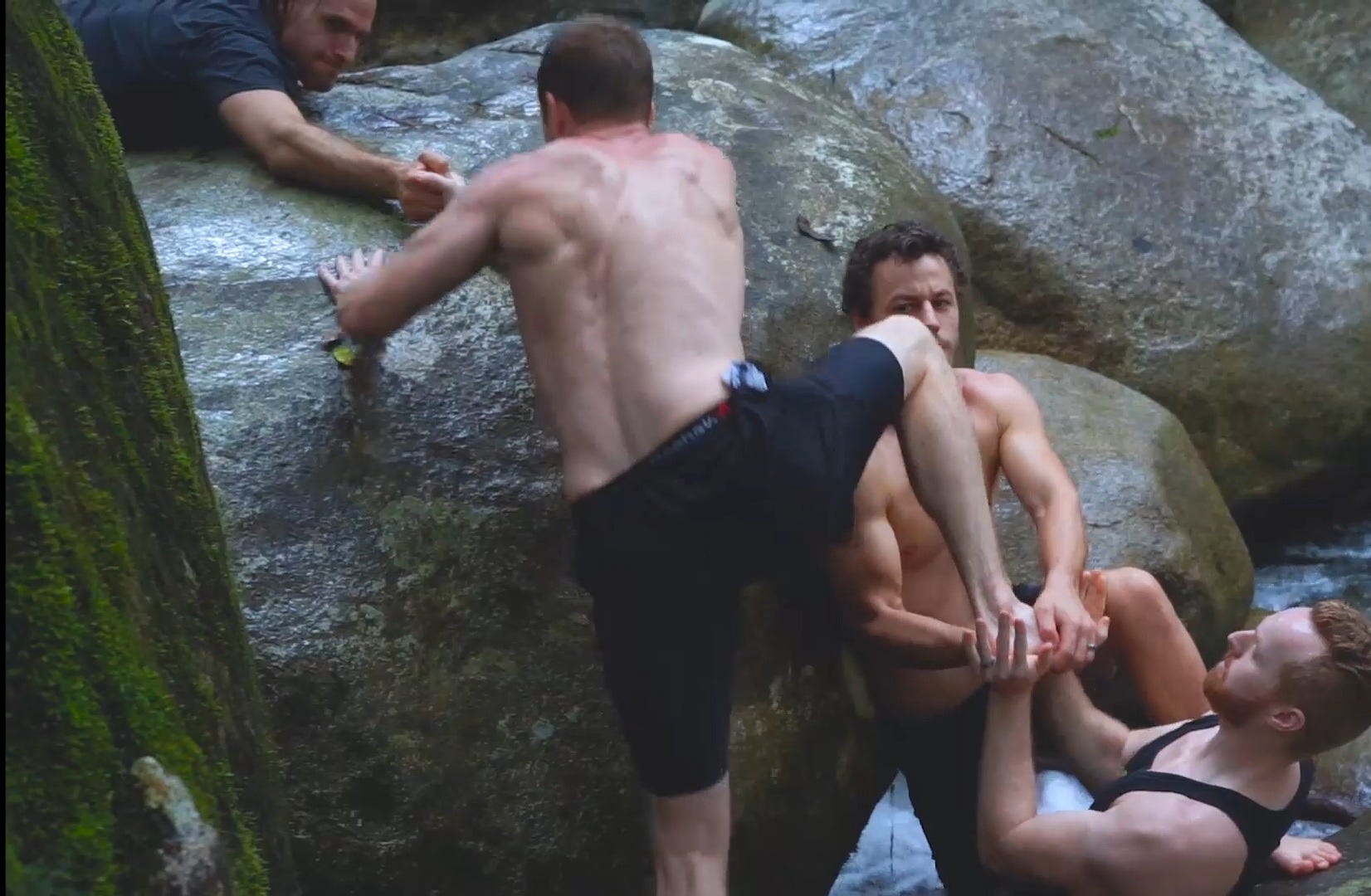
Over time, movement at Zafra became more than crossing terrain. It became a practice of learning to respect, participate in, and remember my part in living systems larger than myself.
The land was no longer just a practice ground.
Relationship with place became a deep part of the practice.
Zafra taught me to adapt. But adaptability creates another question:
What happens when a successful response is no longer appropriate?
I had encountered this problem before:
In Baghdad, a nervous system organized for threat could keep you alive. Fatigue affected judgment. Awareness and cooperation had consequences. Physical ability served something beyond self-image.
But an adaptation that saves you in one environment can become fragility when it cannot update in another.
Ready for war didn’t automatically become readiness for peace.
The armor still worked.
The environment had changed.
That is why antifragility cannot simply mean becoming harder.
Hardness may help you endure impact. It does not necessarily help you recognize when the impact is over.
Capability is out of line if it can’t update.
And an effective response can still damage the person, relationship, or larger system around it.
This is where coherence comes in.
Coherence: What Does Your Strength Serve?
Then my daughter, Luna, was born in our home at Zafra.
Fatherhood became the clearest “fitness” transfer test I had encountered.
A training program can look excellent when sleep is predictable, time is protected, and recovery is prioritized.
A child changes the test.
Plans break.
Sleep disappears.
Responsibility arrives anyway.
The question is no longer only:
“Can I finish the workout?”
It becomes:
“Does this practice help me remain available?”
Can I carry my daughter the day after training?
Can I regulate myself when she is overwhelmed?
Can my practice respond to the needs of the household, or must the household continually protect the conditions my practice requires?
Coherence is the ability to adapt without abandoning those that your power is meant to serve.
It is not a moral layer added after physical performance.
It changes what counts as performance.
With Luna, someone depended on my love, presence, and ability to attune with her.
Power mattered because someone needed it.
Optionality mattered because the day rarely followed the plan.
Recovery mattered because responsibility couldn’t wait for ideal conditions.
If family life had to organize itself around the fragility of my fitness, then that fitness was not serving us.
It was asking us to serve it.
Fatherhood made it clear: fitness is relational.
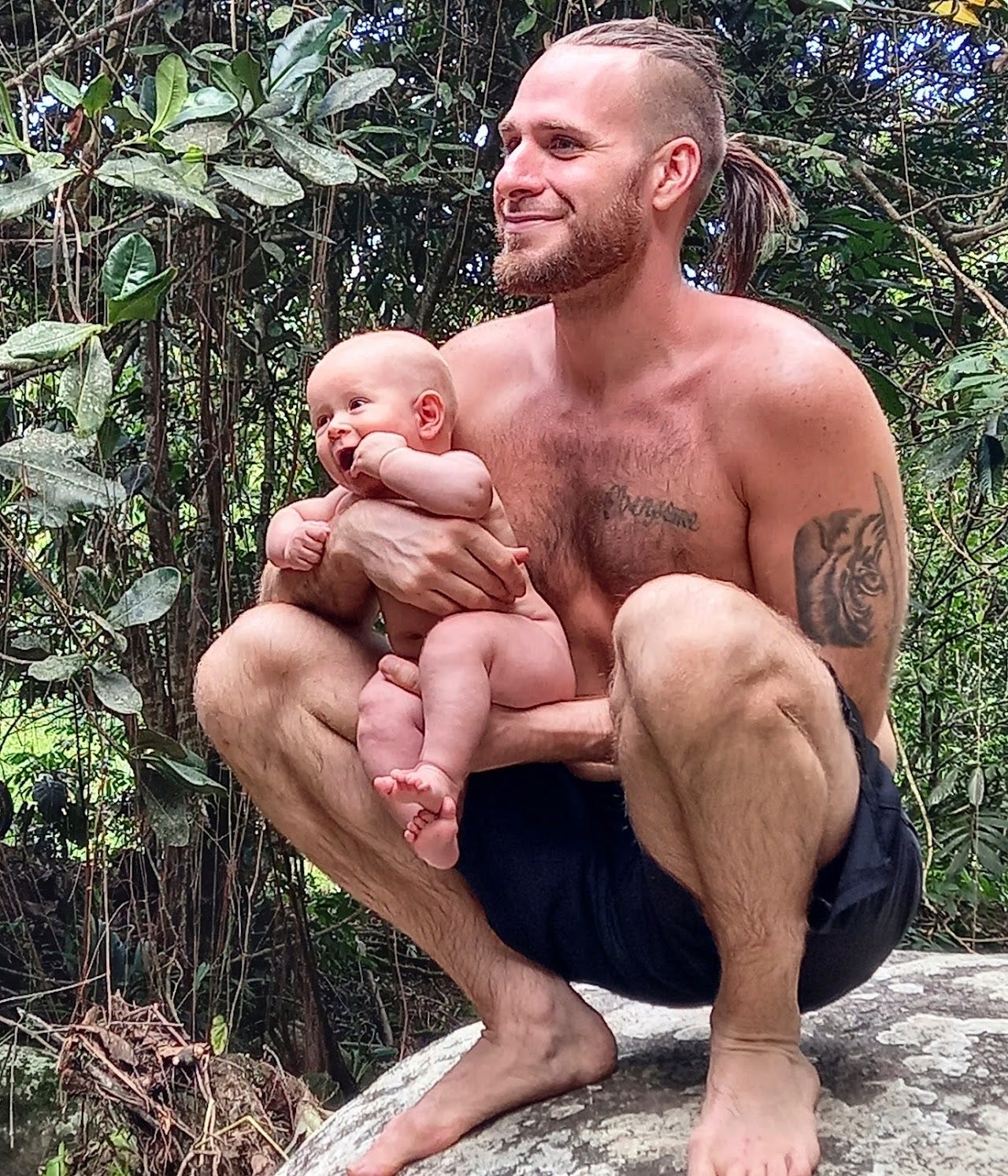
My practice became coherent when it strengthened my Contact and Capability in service of the life around me…not merely the body performing it.
Capability without Coherence can produce impressive people who suck to live with.
They can complete the workout but resent the interruption.
They can tolerate physical pain but not relational discomfort.
They can control the barbell while being enslaved by fear, anger, or compulsion.
They can achieve the goal while damaging the home, the environment and the living systems that made the achievement possible.
A response can work in isolation and still be wrong in connection.
Coherence asks a deeper question than whether the task was completed:
What did your response cost, and what did it serve?
Fatherhood taught me what adaptation must serve.
A Simple Transfer Test
You do not need to join the military, move to Colombia, or find a beam in Shanghai.
Take a familiar movement pattern and safely change one variable: the object, surface, or visual cue.
Then notice what disappears.
Do you add tension?
Do you stop breathing?
Do you try to force your preferred strategy after it stops working?
Next, remove that strategy:
Use a different grip.
Change your position.
Alter your rest interval.
Choose patience where you would habitually choose force.
Finally, observe what the pressure costs.
Do you become less patient or more frustrated?
Does finishing matter more than the signal telling you to stop?
Does training make you more available to life? Or does life have to protect your training?
Performance under pressure matters. But so does the person who remains after the performance.
This isn’t an argument for making every practice chaotic. It’s an invitation to discover where your competence remains dependent on perfect conditions.
Balance Is a Living Process
The beam in Shanghai didn’t invalidate my strength.
It put strength in context.
Balance isn’t stillness.
It’s a living process of sensing change and reorganizing around it while remembering what matters most.
Life works the same way.
Contact lets you sense what’s changing.
Capability gives you options for reorganizing.
Coherence keeps this reorganization in harmony with your values, your relationships, and the life around you.
The goal is not to become invulnerable.
It is to become less dependent on perfect conditions.
Let reality grade you.
Let unfamiliar conditions grade you.
Let the people closest to you grade you.
A standard tells you what you did then, under selected rules.
Reality asks what you can do now.
On this ground.
With this person.
Inside this uncertainty.
In service of what matters.
The real question is not how fit you are when the test is familiar.
It is how much of you remains aware and available when life changes the test.
Holonic Human is a weekly field guide to Earth-embodied evolution in a high-tech age.
Already subscribed? Reply with one sentence:
Where does your power to enact change still depend on perfect conditions?
I read every response.
New here? Subscribe below to receive the next essay.
Let's build antifragile bodies!